Kitchen Organisation Patterns in Observational Studies
February 2026
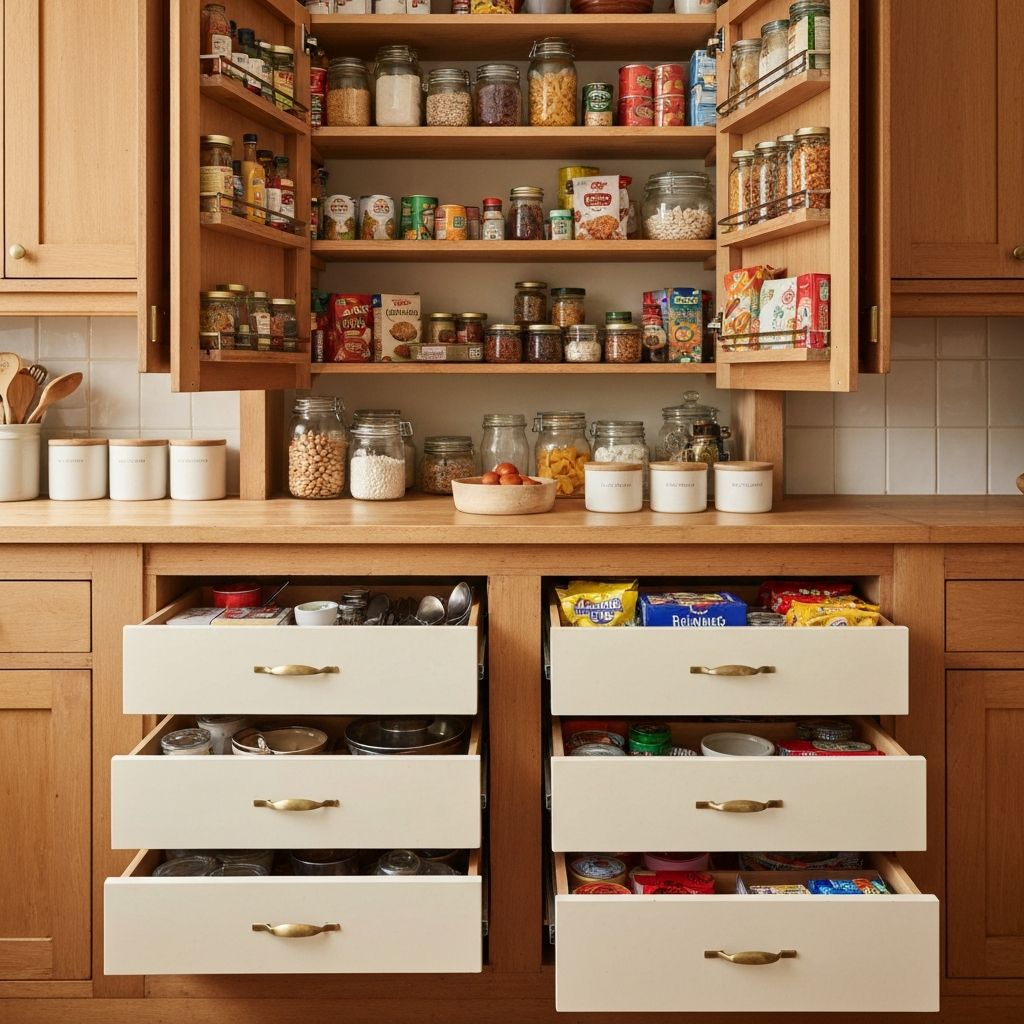
How Households Organise Food Storage
When researchers conduct observational studies of household food environments, they document how foods are physically organised within the kitchen and food storage areas. Kitchen organisation patterns vary considerably between households and reflect different storage methods, food types, habits, and available space. Understanding these patterns provides insight into how households structure their food environments.
Common Storage Methods in UK Kitchens
UK households typically use several different storage methods for food: refrigerators, freezers, cupboards, drawers, shelves, and food storage containers. How foods are distributed across these locations and how they are arranged within each space varies between households. Some homes have more cupboard space, others rely more on visible shelving. Some households use transparent storage containers, while others use opaque packaging or original food containers.
Observational studies have documented these variations. Researchers visiting households note where staple foods like grains, tinned items, and dried goods are stored; where fresh produce is kept; where snack foods are located; and how refrigerated items are arranged. These observations create a picture of how individual households organise their food storage.
Refrigerator Organisation
The refrigerator is often a focal point of food organisation and visibility. Observational studies have noted how households arrange items in the fridge: which items are at eye level, which are at the back, which are in doors, and which are in drawers. Fresh vegetables, dairy products, leftovers, and condiments are organised differently depending on household practices and refrigerator design.
Some households keep ready-to-eat foods and prepared items prominent in the refrigerator, while others prioritise fresh, raw ingredients. These organisational choices may relate to the types of foods household members typically consume and the time available for food preparation.
Cupboard and Shelf Arrangements
How cupboards and shelves are organised reflects both practical decisions and household preferences. Foods that are used daily may be stored at convenient heights and locations, while foods used less frequently may be stored in less accessible spaces. Staple items like grains, legumes, tinned goods, biscuits, and cereals are organised differently across households.
Some households use multiple smaller containers or glass jars for dry goods, while others keep items in original packaging. Open shelving versus closed cupboards changes what foods are visible to household members and what they encounter during daily kitchen activities. These organisational choices affect the food environment that household members navigate.
Snack Food Storage
Observational studies have specifically examined how snack foods are stored in households. Some homes keep snacks in a dedicated drawer or cupboard, some store them on open shelves, some keep them in a pantry, and some have snacks distributed throughout the kitchen. The visibility and accessibility of snack foods relates to how often they appear in household consumption patterns in some studies.
Bulk and Portion Packaging
How foods are packaged or portioned for storage also varies between households. Some households buy foods in bulk and divide them into smaller portions for easier access and use. Others keep foods in original, often larger packaging. Whether foods are immediately visible (unpackaged), in transparent containers, or in opaque storage relates to visibility and accessibility—factors documented in household research.
Factors Influencing Kitchen Organisation
Kitchen organisation reflects multiple influences: the size and design of the kitchen, the number and type of storage spaces available, family size and composition, food purchasing patterns, cultural practices around food, storage preferences, and available time for organisation. These factors vary considerably between households.
The same household may also change its organisation patterns over time, seasonally, or based on changing household members and circumstances. Organisation is not static but reflects ongoing household decisions and practices.
What Observational Studies Reveal
Observational studies of kitchen organisation have revealed considerable heterogeneity in how households structure their food storage. There is no single "normal" way that kitchens are organised. Instead, many different approaches exist, reflecting the diversity of household preferences, practices, and constraints.
Some research has examined whether certain organisational patterns correlate with dietary outcomes in that household. For example, households that organise fruits and vegetables in easily accessible locations may have higher fruit and vegetable intake than those with less accessible produce storage. However, these are correlational observations, not causal relationships.
Individual and Cultural Variation
Kitchen organisation is influenced by cultural practices, family traditions, individual preferences, and practical constraints. Different cultural backgrounds and communities may have different typical approaches to kitchen organisation, reflecting different food practices and storage needs. What represents "organised" or "disorganised" is also culturally influenced.
Limitations and Considerations
It is important to note that observational documentation of how kitchens are organised does not establish that any particular organisation is better or worse, nor does it establish causation between organisation and eating outcomes. Households with different organisational patterns differ in many ways—including preferences, resources, cultural background, and family composition—that could influence dietary patterns independent of kitchen organisation itself.
Additionally, kitchen organisation exists within the context of individual eating patterns, preferences, and household norms. The same organisational setup may result in different eating patterns in different households depending on these other factors.